Rugs are generally woven to a pre-planned pattern, they have set characteristics and there are commonoly found designs, these can be explained as:
Rug Layouts
Persian rugs, and rugs in general, have a limited number of layouts. Almost all of these have a number of elements in common, including the field, a border or multiple borders and some form of medallion or pattern.
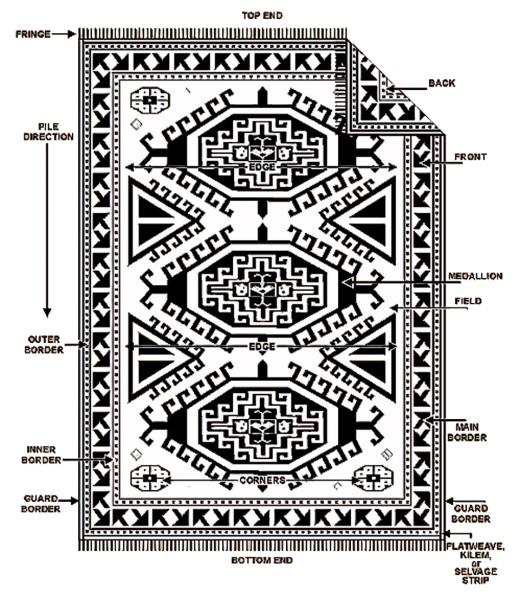
Some of the most commonly used for Persian designs are the all-over, medallion and one-sided layouts. This simply refers to the type and location of the patterns used in the rug.
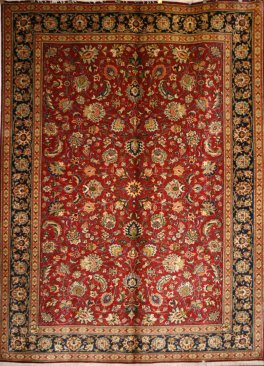
All Over Design
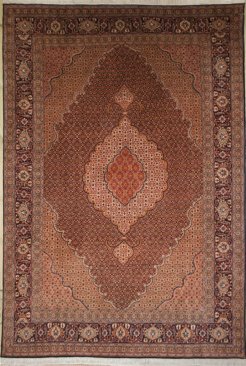
Central Medallion
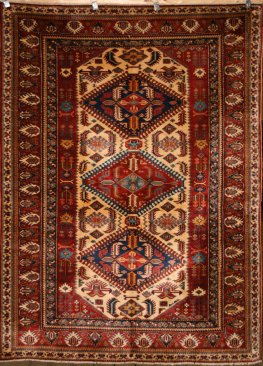
Repeat Medallion
All Over Medallion
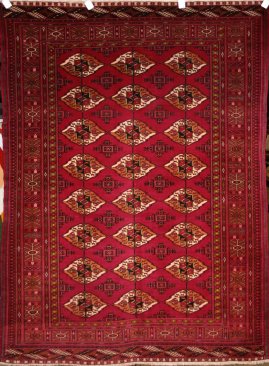
Vase Design
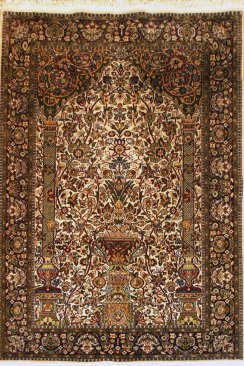
Garden Carpets
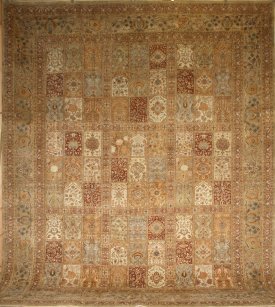
Tree of Life
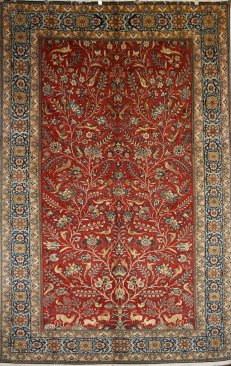
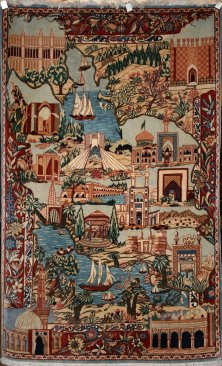
Pictorial
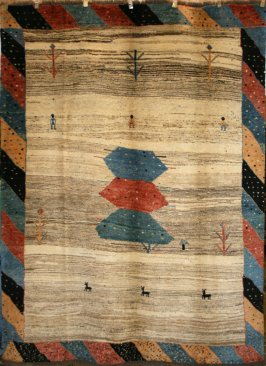
Modern & Gabbeh
Rug Motifs
There are a number of patterns which are found in Persian and Oriental rugs called 'motifs', these designs have different meanings and tend to be used depending on the area the rug was woven although it is not unusual to find more than one motif in a single rug.Some of the more common motifs are:
Boteh
Boteh is the Farsi word used to describe in immature flower or palm leaf. This motif is often found in a cluster (all-over pattern) however has been known to be used in isolation in intricate, artistic weaves.
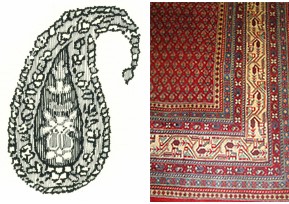
Various interpretations of the design have included: Flames, Tear drops, Pine cones, Pears and Trees. In the 19th century in Scotland, the design which was then found on Kashmir shawls and scarfs was copied to make the now world famous Paisley shawls.
Gul
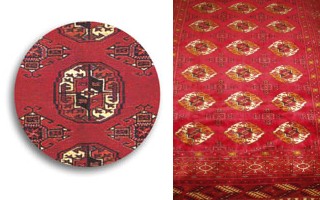
The Gul motif is often seen in Turkman, Gorgan and Khal Mohammadi rugs. 'Gul' is Farsi for flower and is normally used to describe these octagonal, all over or repeated patterns.
Herati
The Herati motif is a very common repeated field design which normally consists of a flower centred within a diamond surrounded by curved leaves parallel to each side of the diamond. This can be in various forms in either geometric or curvilinear designs.
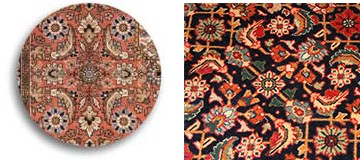
Mina-Khani
Mina-Khani is used to describe this distinctive pattern used in many Persian rugs. The pattern is made up of repeated daisies interlinked by diamond (often curved) or circular lines. This design is used regularly in a number of different rug types and is not representative on one single area. The design is almost always an all-over patter, it can be found in many rugs but certain workshops almost exclusively use it such as those weaving Varamin rugs.
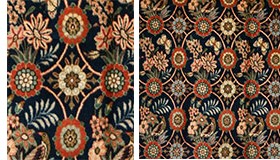
Rosette
The Rosette design is a circular arrangement of motifs radiating out from the centre medallion suggesting the petals of a rose. This can be used in the borders however is mostly limited to the field and can be in either naturalistic or geometric form. The Rosette design is often found in Nain rugs.
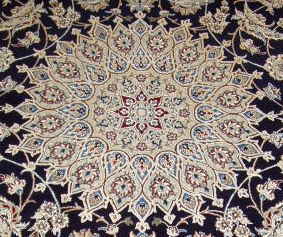
Shah Abbasi
This is the name given to a group of palmettes which can be found in all-over and medallion designs as well as in borders. Shah Abassi motifs are frequently seen in Kashan, Isfahan, Mashad and Nain rugs amongst others. But is perhaps most common in Tabriz rugs
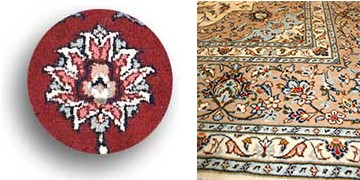
The court period of the Persian carpet ended with the Afghan invasion in 1722. The Afghans destroyed Isfahan, yet their domination lasted for only a short period and in 1736, a young Chieftain from Khorasan, Nader Khan became the Shah of Persia. Through the whole course of his reign, all the country's forces were utilized in campaigns against the Afghans, the Turks, and the Russians. During this period, and for several turbulent years after his death in 1747, no carpets of any great value were made; solely nomads and craftsmen in small villages continued the tradition of their craft
In the last quarter of the 19th Century and during the reign of Qajar, trade and craftsmanship regained their importance. Carpet making flourished once more with Tabriz merchants exporting carpets to Europe through Istanbul. By the end of the 19th Century some European and American companies even set up businesses in Persia and organised craft production destined for western markets. Through this development new designs were made with Western tastes in mind. An example of this is the Manchester based German company Ziegler & Co. moving to Iran to develop new carpets for export, their work with the master weavers of Iran led to the development of carpets suited to Western interiors such as the Ziegler rug which is currently one of the most popular rugs in production.
Today, carpet weaving is by far the most widespread handicraft in Iran. Persian carpets are renowned for their richness of colour, variety of spectacular artistic patterns and quality of design. In palaces, famous buildings, mansions and museums the world over, a Persian carpet is amongst the most treasured of possessions.